
Industrial IoT solutions are playing an increasingly important role in cutting costs and improving businesses' management and production efficiency. So what is industrial IoT? What are its benefits and applications for production areas, factories...? Let's find out with SmartBiz!
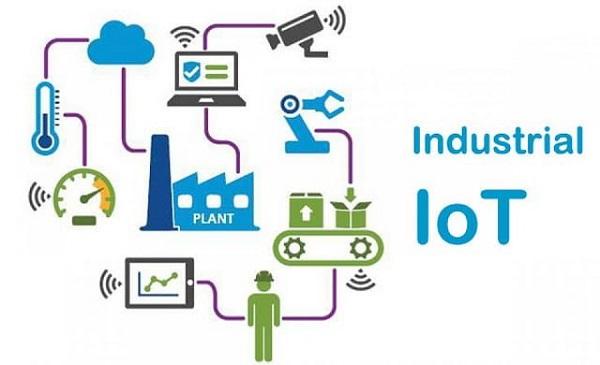
IoT for industrial manufacturing
IoT là gì?
IoT for industrial manufacturing, also called industrial IoT (Internet of Things), is a core component of industrial transformation efforts worldwide, including Industry 4.0 (the Fourth Industrial Revolution) and the Industrial Internet (with the Industrial Internet Consortium). IoT refers to the digital platform where billions of devices and computers around the world are connected to the Internet to collect and share huge amounts of data.
IoT is defined as the use of smart sensors and actuators to improve the productivity and performance of manufacturing and industrial processes. IoT harnesses the power of smart devices and machines and real-time analytics to make use of the data machines have generated in industrial environments for many years.”

IoT - helping businesses improve production efficiency
What benefits does IoT bring to manufacturing?
IoT lets manufacturers create autonomous networks to streamline production processes while saving as much cost as possible. Here are the benefits industrial IoT brings:
Greater operational efficiency and productivity
The first benefit of IoT is that it gives manufacturers automation capabilities, optimizing their operational efficiency. Robots and automated machines can work more efficiently and accurately, boosting productivity and helping manufacturers streamline their functions.
By accessing data in sensors and automation equipment, system operators can use predictive maintenance techniques together with remote management to improve operational efficiency ---> reducing maintenance costs. With real-time performance metrics available to operations managers, system maintenance can be scheduled strategically rather than periodically.

IoT - increasing production efficiency
Smarter machines
Thanks to machine-to-machine communication, managers get a more complete view of the state of all equipment, supporting decisions that minimize delays and downtime in the production system.
Improved processes and good quality control
IoT can benefit businesses by improving processes and raising production quality by bringing greater flexibility into the business.
IoT's support in monitoring both equipment settings and the results of each production step gives manufacturers greater assurance of detecting quality problems at the source, so improvements can be made promptly.
Lower costs through predictive maintenance
Predictive maintenance works by statistically analyzing equipment condition to anticipate equipment failures, continuously monitoring machines during operation and alerting system operators when there are signs that equipment needs replacing or attention.
With predictive maintenance, operators can take measurements of different aspects of equipment performance and condition, collect and analyze data and use the information to manage the overall application better.

IoT - reducing project maintenance costs
Real-world applications of industrial IoT
According to Verizon's “State of the Market: Internet of Things 2016”:
76% of leaders in manufacturing say IoT is giving them deeper insight into customer preferences and behavior.
66% of leaders use IoT to measure risk, protect business assets and improve employee safety.
60% of leaders are improving the reliability or performance of products and services with IoT.
Not every device needs to be smart or connected right away. However, amid the advances being made in industrial IoT, investments in industrial connectivity have delivered strong results for many customers across many sectors. Let's look at some real-life IoT applications:
Production operations
Businesses now spend more than 57% of their investment on solutions such as asset management, smart manufacturing, performance optimization and monitoring, automated production planning, human-machine interaction, and production process traceability and reporting.
Production operations include several typical elements of production management, such as asset management, smart manufacturing, performance optimization and monitoring, planning, human-machine interaction, end-to-end operational visibility and cyber-physical systems. Businesses spend more than 57% of all their IoT manufacturing investment on these solutions.

Applications in production operations
Production asset management and maintenance
This is the second-largest IoT use case in manufacturing and in fact covers a wide range of potential applications. They include controlling performance and optimizing asset operation, from monitoring and tracking location to monitoring parameters in areas such as quality, performance, damage, potential failures or breakdowns, bottlenecks…
In addition, IoT helps improve equipment maintenance with a new method, predictive maintenance, through applications in production asset management and maintenance.

Applications in production asset management and maintenance
Services
According to an IDC report, this is the third most important IoT use case in manufacturing. Here, it connects data from customer-facing departments such as marketing and sales with production. IoT's rich information network works very well with planning and scheduling tools and brings many positive changes to the business's production.
What you need to know about applying industrial IoT
Industrial equipment and controls are connected over the Internet through control devices such as PLCs, DCS or SCADA for automatic or semi-automatic control. When industrial IoT is applied in a factory, these systems are managed over the Internet. Managers can know how machines are operating without going to the factory. Moreover, we can control connected equipment from anywhere in the world over the Internet.
>>> Learn about business digital transformation using IoT.
So connecting the equipment in a factory lets managers know how machines are running, control equipment remotely, monitor fuel levels...
Industrial IoT solutions are widely applied in industry because they bring businesses many outstanding benefits. If you are looking for a new solution that saves production costs, improves processes and gives the best quality control, then industrial IoT is a great choice for you. Contact SBiz.vn to learn more by commenting below!