
In this era, technology keeps developing and is gradually taking root in humanity's evolution. Two standout examples are artificial intelligence (AI) and the Internet of Things (IoT). So, in the long run, which one is the key to supply chain management in the future?
What is artificial intelligence?
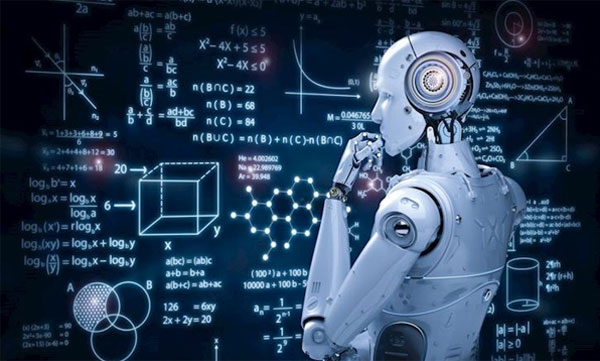
Artificial Intelligence (AI) is a technology field within computer science. It is an intelligent product programmed by humans to enable computers to automate intelligent behavior like a real human brain.

What is artificial intelligence?
Artificial intelligence technology applies machine learning systems to help computers simulate human intelligence in situations such as thinking and reasoning to solve problems, communicating in language and speech, and adapting on their own... AI then sets its own goals and continuously improves its operating methods from previously recorded data until it finds a more optimal and effective way to achieve the goals set.
AI vs. IoT
There are 4 main factors that distinguish artificial intelligence (AI) from the Internet of Things (IoT), detailed in the table below:
Table comparing AI and IoT
The trend of integrating artificial intelligence into supply chain management
AI has been around for a long time, but its potential to handle complex problems in supply chain management has not been fully exploited. In practice, AI is gradually being integrated into supply chain management to solve problems such as inventory management, procurement planning, equipment layout, and freight consolidation and scheduling.
Inventory management
Automated warehouses with integrated AI are a solution that minimizes risk while cutting costs for businesses. This technology can carry out most tasks, such as predicting demand, rerouting goods in transit, editing orders and communicating with other AIs to optimize transport between warehouses…
AI supports effective inventory management
The flexibility of artificial intelligence can reshape the traditional warehouse management model.
Transport network design
Genetic algorithms have become a popular AI technique for solving problems related to transport network design, such as transport system planning, travel schedules, freight consolidation, intermodal links with road networks, or gas distribution pipeline networks…
Procurement and supply management
AI can help procurement managers evaluate the effectiveness of potential suppliers, improve information exchange between the 2 partners and shorten decision-making time.

AI technology shortens the procurement and supply process
Artificial intelligence can also automate the search for potential suppliers through online product catalogs, evaluating suppliers on many attributes, then screening those that meet the standards and completing orders.
Demand planning and forecasting
AI techniques have proposed pattern-matching methods within a system framework combined with human expertise and data mining techniques to predict demand for products in the new era.
Order picking
AI technology can assign workers to specific zones for orders. It is also designed to control conveyor speed to minimize queuing time and maximize the number of orders picked.
Customer relationship management
With AI, managers can review and evaluate customer interactions on social networks and then combine them with word-of-mouth marketing for their products and services.

Customer relationship management can be fully controlled with AI
>>> What is industrial automation? Learn about its benefits
Clearly, artificial intelligence is a technology application with wide coverage across every field. In supply chain management, AI can help businesses fully grasp their business situation in real time, predict trends, set strategy and allocate plans while ensuring work progresses as efficiently and smartly as possible.