
Industrial automation is an inevitable, widespread trend today that helps businesses make breakthroughs and strengthen their competitiveness in both domestic and international markets. So what is industrial automation? Let's find the answer with Sbiz.vn in this article!
What is industrial automation?
Industrial automation is the application of automatic control systems such as robots, computers, software platforms, information technology, artificial intelligence... to control machinery and process and operate production automatically in place of people. After mechanization, it is the second step in industrialization.
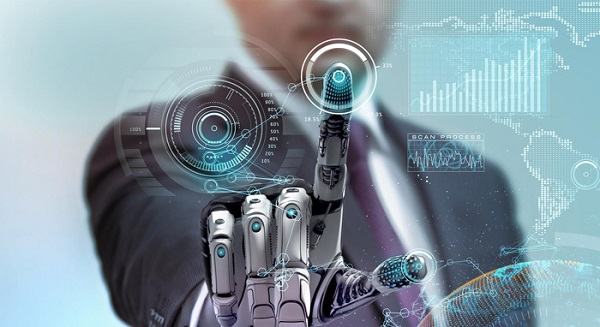
Understanding industrial automation
What benefits does automation bring to industry?
Applying automation brings industry many outstanding benefits, such as:
Higher productivity
Although companies and factories can hire workers to keep the plant running over 3 consecutive shifts, they still lose time to shutdowns for machine maintenance and holidays, so time isn't used optimally.
By letting the plant run 24 hours a day, 7 days a week and 365 days a year, industrial automation helps companies significantly increase production output and meet their original targets.

Industrial automation lets plants run 24/7, 365 days a year, significantly increasing production output
In addition, with optimal performance, automated machines can deliver 3-5 times the productivity and output of traditional methods in an hour or even a minute. Minimizing the product's cycle time (C/T) is the decisive factor here.
Quality improvement
Applying automation helps companies minimize errors caused by human inaccuracy. Moreover, unlike workers, robots never feel tired, lose focus or have a bad attitude. This keeps production quality consistent regardless of when the work is done.
High customizability and flexibility
Making changes and adding new stages or tasks to the production process is usually very complex, requiring businesses to train workers and operators directly. Robots, however, can carry out any task once programmed, making the production process more customizable and flexible.

Robots can carry out any task once programmed, making production more customizable and flexible
Highly accurate information collection
Instead of traditional methods that are costly, time-consuming and labor-intensive, companies can apply automatic data collection. This not only gives businesses important production information but also increases data accuracy while significantly reducing data collection costs.
By applying these capabilities well, businesses can optimize processes, cut waste and, above all, make the right decisions at critical moments, creating breakthroughs in their business.
Workplace safety
Automated production lines can better protect people working in harsh production environments, such as toxic chemicals, polluting dust and fumes, high noise, cramped or confined spaces...
Despite the outstanding benefits above, industrial automation often makes businesses hesitate over one big issue: high initial investment costs. Besides investing in infrastructure and machinery, businesses also need to invest in training staff to use these complex systems.
Industrial automation systems and solutions
Applying industrial automation systems is an inevitable trend today. SmartBiz IoT solutions have become sought after by countless businesses.
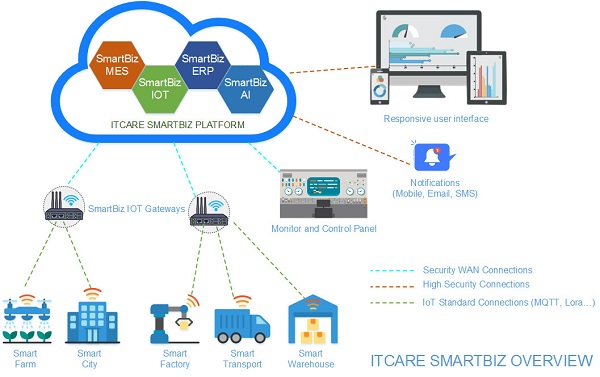
Software platforms in industrial automation systems
Here are the software platforms in today's industrial automation systems:
SmartBiz IoT: an application that helps businesses receive, process and control production assets effectively.
SmartBiz ERP: known as a powerful business process management platform that links production activities with business activities.
SmartBiz MES: an application that connects, monitors and controls production activities. In workshops, MES is deployed to provide information to quality management, production management and machine operators.
SmartBiz AI: used to simulate and analyze collected data flows to optimize factory operations.
Notifications: a system of alerts and notifications from equipment activity on tablets, SMS, mobile...