For order fulfilment to be truly efficient, you need a clear, accurate understanding of your inventory. What products do you have? Where are they in your supply chain? Is this information accurately reflected in your warehouse management system?
In this article, you will learn why inventory visibility matters for customer satisfaction, its overall benefits and how to improve it.
Contents
1. What is inventory visibility?
2. Why does inventory visibility matter?
3. Benefits of increasing inventory visibility across the supply chain
4. The biggest inventory visibility challenges
5. How to improve inventory visibility
6. Frequently asked questions (FAQs)
What is inventory visibility?
Inventory visibility refers to the ability to see and track inventory in real time, gaining detailed insight and knowing exactly how many units of each product are in stock at each location and where they are stored in the warehouse or fulfilment center.
Inventory includes goods, materials and raw materials for sale or used to build new products. There are four main types of inventory: finished goods, raw materials, work in progress, and maintenance, repair and operations (MRO).
What is order visibility?
Order visibility tells a business when orders are placed, when they are fulfilled and how they are shipped. With order visibility, you can track order fulfilment all the way through shipping to final delivery. Order visibility is key to excellent customer service because it can reduce customer inquiries and complaints. That, in turn, reduces your costs.
Why does inventory visibility matter?
Inventory visibility lets businesses better meet customer demand and reduce costs. Supply chain visibility lets you and your customers track products at the production center, warehouse, retail store or in transit.
Some retailers around the world say items are delivered late because they sold items that weren't actually in stock. Inventory visibility is also crucial for wholesale distributors, helping them manage costs and meet demand. For manufacturers, it ensures they always have access to the raw materials needed for production. In many cases, inventory tracking software can help lower costs.
Beyond on-time delivery, here is how better inventory visibility can help a business grow:
Ensuring accurate inventory counts across all locations and sales channels, both physical and online, delivers a better customer experience.
Helps pinpoint issues that are causing delays, so you can make adjustments to meet fulfilment demand
Provides insight into which products sell best or are trending
Identifies opportunities to save costs
Provides real-time visibility into orders and shipments, giving reliable advance knowledge of when goods will arrive
Improves customer satisfaction by fully sharing the range of available products, fulfilment options and when deliveries will arrive.
4 biggest benefits of increasing inventory visibility.
Inventory visibility directly affects order fulfilment, which ultimately affects profit. There are many benefits for a company in knowing how many stock keeping units (SKUs) it has in its warehouses, stores or with its drop-shipping partners.
#1. More efficient use of time
Tracking inventory manually is a time-consuming process, and the results of this process can cost a lot of money. This is especially true for operations working within a complex supply chain, where products are regularly moved between multiple warehouses, distribution centers and stores.
With advances in technology such as RFID and barcode scanners, inventory tracking can be far more automated than before, allowing more efficient use of time and capital.
#2. Better forecasting
To succeed at order fulfilment in the long run, an operation needs to forecast its inventory needs well. How much of each product is typically needed in a typical business cycle? When do you experience peak demand? Does your operation experience any seasonality?
By ensuring accurate inventory visibility, an operation can continuously adjust current stock levels against expected demand, enabling smarter replenishment and reducing safety stock. Without a clear sense of the inventory your operation holds, it is easy to order too much or too little product, reducing your ability to fulfil orders.
See also: The essential guide to inventory planning
#3. Stronger security and quality control
Although inventory visibility is mainly about knowing how much inventory there is at each step along the supply chain, it brings an important additional benefit for highly regulated industries: the ability to track specific products/orders from point to point.
For example, operations involved in producing and shipping goods in industries supplying biomedical supplies, pharmaceuticals, food and chemicals often have to track much more closely exactly where products (by lot or batch) are delivered.
Having accurate information on this is crucial to successfully handling recalls, especially in industries where consumer health may be affected. Accurate inventory visibility and tracking across the supply chain make it easy to resolve these issues before they get out of control.
#4. Smarter resource allocation
When it comes to a business's balance sheet, inventory can be one of its largest asset/cost line items. Every piece of inventory represents a certain amount of money tied up in physical form on the shelves of stores, DCs, etc.
When each unit represents an amount of money, your goal should clearly be to bring your inventory down to the lowest possible level while still meeting customer demand. Doing so frees up capital that would otherwise be locked up as items on your shelves: capital you could put to better use growing and expanding your business.
Improving your inventory visibility means creating a more accurate picture of your current stock levels. This data, combined with other data on your orders and normal demand, lets an operation make smarter decisions about when to replenish.
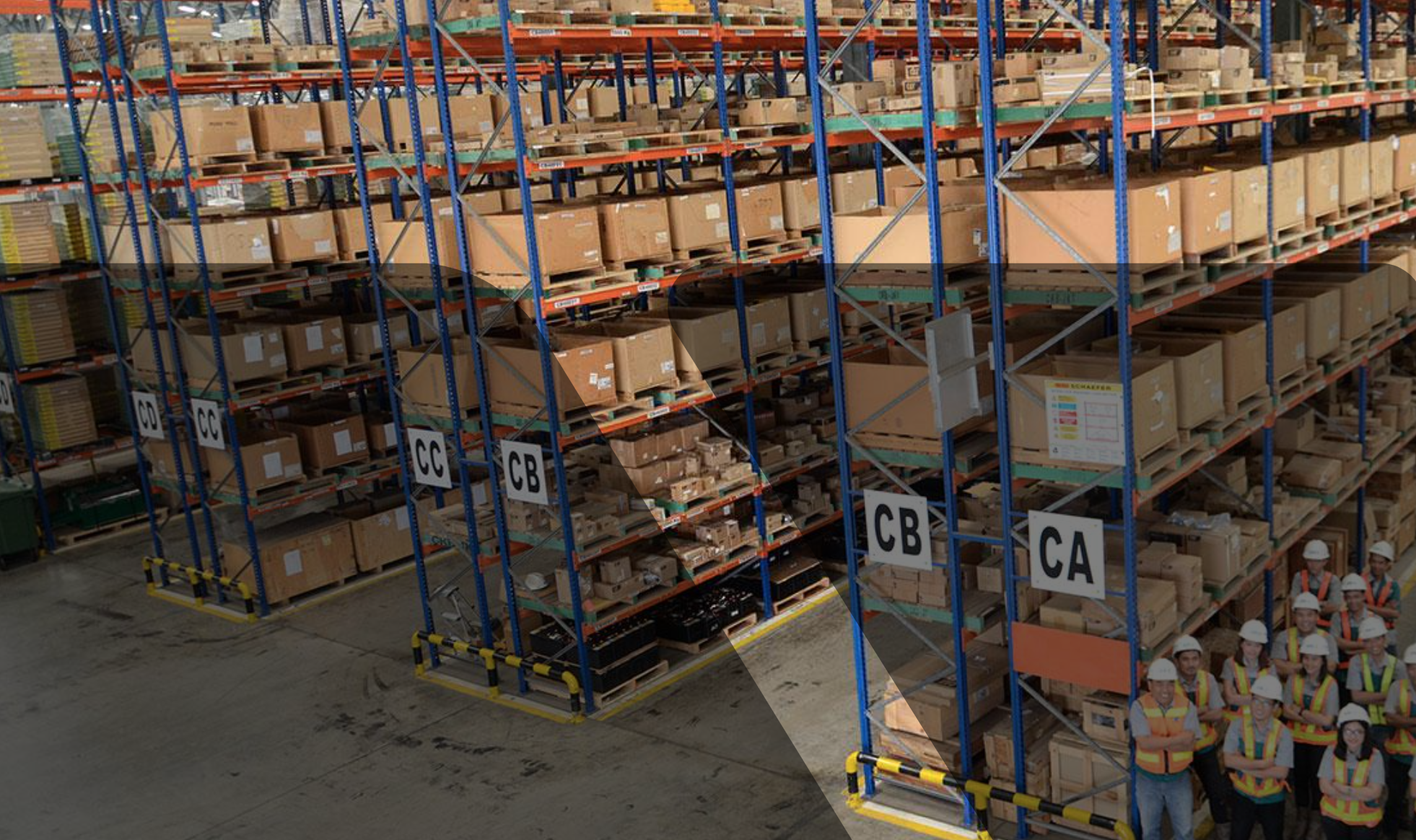
Increase inventory visibility with smart warehouse management
The biggest inventory visibility challenges
E-commerce gives customers many fulfilment options, and that comes with challenges. Products can reach customers through in-store purchase, buy online and pick up in store (BOPIS), ship from warehouse, ship from store or ship to order.
Challenges in achieving real-time inventory visibility:
Upfront technology costs can be significantly high
Continuing to use manual tracking systems
Not understanding automation as a way to improve multichannel sales
Difficulty integrating legacy software systems with inventory management software
Problems entering accurate data into the system
Revealed: the 6 best ways to manage a smart, modern warehouse and optimize performance
Challenges in achieving accurate inventory visibility include:
Undocumented changes: Undocumented inventory changes caused by manual processes, or unreported loss, shrinkage, breakage or damage, hinder effective planning and execution.
Lack of visibility: The inability to track and trace products across multiple ERP, SCM and CRM applications internally and across the partner ecosystem can cause unnecessary delays and deliver a poor customer experience.
Reactive management: When managers are notified late about unplanned events, they can't always use the systems in place to respond.
Uncertain demand: Without inventory visibility, the result can be excess inventory and speculative ordering.
Missing data: Managers without access to critical information when they need it can lead to lost sales, stockouts, markdowns and shrinkage.
Deployment issues: When managers don't know the location and quantity of inventory available to deploy across the network - in terms of time, geography and demographics - they may make uninformed decisions.
Out-of-stock items: Customers who can't get what they need from you are likely to switch brands or buy from your competitors.
Poor planning: Planning without item-level plans, upstream and downstream, can lead to shortages followed by overcompensation and excess. These problems can lead to increased markdowns and write-offs of slow-moving and obsolete inventory.
Inadequate legacy tracking platforms: Legacy e-commerce platforms and enterprise resource planning (ERP) systems often don't provide the real-time updates a multichannel business needs.
Case study: businesses struggling to integrate ERP software for smart warehouse management
How to improve inventory visibility
Improving inventory visibility will likely come from a combination of technologies, which may include RFID or barcode scanners, warehouse management software and other automation technologies. By working with a qualified systems integrator, operations can make sure they get a custom solution for improving inventory visibility at every point in their supply chain.
Ways to improve inventory visibility:
Use RFID or barcode scanners: Barcode scanning provides real-time updates as inventory moves from one location to another or within the warehouse. These tools reduce labor costs for counting, increase inventory accuracy and add quality control.
Advanced tracking systems: Businesses need digital tools for accurate, real-time management, such asAdd a Warehouse Management System (WMS): A WMS controls warehouse operations, from the overall layout and bin locations to picking, packing and cycle counting.Implement inventory management software: This software manages supply chain activities outside the warehouse. Managers also use it to help forecast future demand by collecting inventory data. However, implementing inventory management software integrated with a WMS provides more information on stock availability and location.
- Use an ERP platform: These powerful platforms collect data and manage production, purchasing, sales, accounting, inventory and more. These tools help overcome supply chain disruptions and automatically adjust orders as stock levels change. ERP controls inventory across locations and channels, including transfers between channels.
Optimize all processes: Efficient processes rely on complete data. Businesses use this information to ensure appropriate stock levels. Sticking to the plan, with only approved exceptions, lets you evaluate effectiveness.
Improve space optimization: An improved warehouse layout reduces the time pickers spend searching for items and increases fulfilment accuracy.
Implement a Distributed Order Management system (DOM / OMS): Order visibility for customers is essential, but so is back-end visibility. DOM provides a global view of all the supply chain systems used to fulfil orders. An order management system (OMS) arranges orders into an efficient picking sequence.
Inventory visibility frequently asked questions (FAQs)
Here are answers to the most frequently asked questions about inventory visibility
#1: How do you increase inventory visibility?
Investing in warehouse management tools, such as a warehouse management system or other kinds of warehouse apps, is a great way to increase inventory visibility. These tools are designed to help you track inventory across your supply chain automatically, from a single dashboard. That way you can quickly see inventory levels in real time and better understand how to manage your warehouse to meet demand across your entire distribution network.
#2: How do you monitor stock levels?
Monitoring stock levels is a tedious process if you still use card systems, Excel spreadsheets, physical ledgers or paper. But by implementing an inventory tracking system, you can monitor stock levels in real time from an overview dashboard. An inventory tracking system lets you make better decisions about where to allocate goods, when to reorder and where to store them to meet demand.
#3: How does SmartBiz deliver inventory visibility?
SmartBiz provides real-time visual inventory visibility with a built-in inventory management system and analytics tools. It provides a map of warehouse locations, the position of each item and the status of goods on racks and shelves… letting you see stock levels across different locations from a single overview screen. The system alerts you to slow-moving goods, inventory shortfalls that need replenishing or excess stock, stockouts, and empty or overloaded locations in the warehouse… speeding up picking, receiving and order processing and saving time.