
With large quantities of goods, every business needs to manage the goods in its warehouse well to keep good control of their quantity and condition. So which warehouse management methods are effective and optimal? Let's find out with Sbiz.vn in this article!
What do warehouse management methods include?
Basic warehouse management methods include compiling, classifying, updating and recording the quantities of the types of goods in the warehouse: which goods are finished products waiting to ship, which are materials stored waiting for production, and which are stock waiting to be sold.
Effective warehouse management ensures continuity in the production - supply - distribution process. Excess or shortage of materials or finished goods can interrupt this process.
The benefits of effective warehouse management
Warehouse management plays an important role in asset management in particular and in the business's operations in general.

Using modern warehouse management methods brings many benefits
Better preservation of goods: goods come in many types and weights - heavy and light - and many shapes - bottled, bagged.... Classifying them and dividing storage locations helps preserve goods better, avoiding goods being forgotten for a long time and becoming moldy or damaged.
Avoiding losses: arranging and classifying goods scientifically not only preserves them well but also prevents losses during use and transport.
Effective warehouse management reduces costs and increases revenue for stores and businesses: with good warehouse management, you can control quantities at each stage, make use of existing stock and detect errors to improve processes. In addition, using warehouse management methods that provide tight control reduces losses, optimizes savings on goods, keeps information updated promptly and keeps the business's production running smoothly.
Helping managers understand their business better: compiling, updating and recording figures every day gives managers data and charts to use in user research and to support business strategy planning.
However, depending on the type of goods, the industry and the size of the warehouse, each person will use different management methods to best suit their situation. Let's look at effective warehouse management methods with Sbiz!
[10 ways] The most effective warehouse management methods
Marking goods
Among warehouse management methods, this is an old, simple but quite effective one. For goods in small quantities or with special features, marking and highlighting them helps managers remember and find them easily whenever they need to pick them.
In Word or Excel, marking goods can be made easier with bold, colors...
Periodic stock counts
Errors are hard to avoid when recording and keeping books. Periodically counting the goods in the warehouse helps managers control order quantities, reduce errors and feel more at ease. Periodic counts also provide data to support research and the next strategy.
Controlling stock levels
For many goods, such as fertilizers, construction materials, household appliances or books..., a certain amount of stock is needed to supply large quantities promptly when demand arises, keeping production, supply and distribution running smoothly without interruption.
Stock levels can be determined based on the following factors:
Seasonal quantities: predict the times of year when demand will rise in order to prepare.
Sales of goods: if the quantity sold increases, production needs to be stepped up.
Number of customer orders: if there are many orders and stock is depleting quickly, plan production to replenish immediately.
Applying FIFO or LIFO
For confectionery, you can use the FIFO (First In, First Out) warehouse management method.
For construction goods, or goods with a long shelf life that need to be issued quickly, you can use LIFO (Last In, First Out).
More discipline - apply more rules
If material shrinkage and loss of goods still occur, managers can consider adding rules and improving the receipt and issue process.
Receiving: carefully check the design and quality of goods. Compare them to make sure they match the documents. Firmly refuse goods whose discrepancies from the documents are too large.
Issuing: check that the documents are correct and reasonable. Check other paperwork to make sure the information matches the actual goods.
Arranging by SKU code
SKU stands for Stock Keeping Unit, roughly meaning a product code. When arranging by SKU, managers create a string of characters based on the goods' location and characteristics. Later, by looking at the string, managers know where the item is or where it is stored.
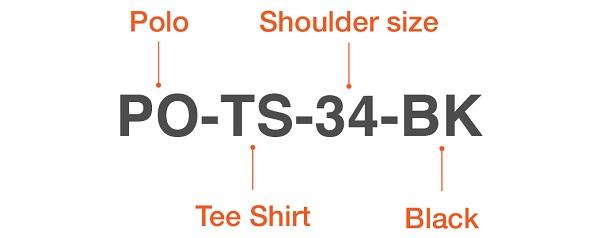
An example SKU code
Naming conventions and arrangement depend on each business's customization, location and product category.
Drawing a goods storage map
In storing and managing goods, it's not just tables and figures: a map of the locations and names of goods gives managers the most complete overview of the business's warehouse.

A warehouse management map helps you grasp the overall situation
When the warehouse becomes too large, try drawing an overview map. Based on it, managers can understand the processes and what is happening... and then make the most appropriate adjustments and optimizations.
Using barcodes combined with product labels
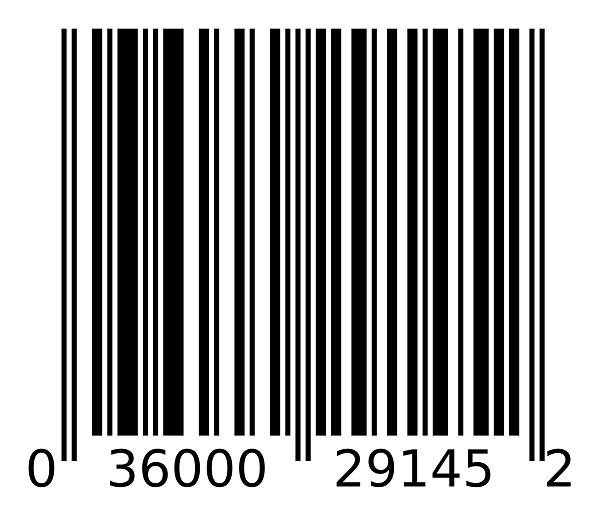
Barcodes are used to store product information
Barcodes make retrieving and storing product information easier, faster and more convenient. With this method, each type of goods has its own barcode. When scanned, managers get all the information related to that type of goods. This fixed information is used for every operation in the warehouse.
For effective warehouse management, relationships matter too!
As a warehouse manager, you don't work alone. You work with many other people: production staff, technicians, drivers, porters. Keep good relationships with them and they can help you spot errors, provide more information on the state of goods and offer perspectives you might not see.
With good relationships with manufacturers, you can negotiate to return goods that are hard to sell or haven't sold for a long time, if your business specializes in distribution or import and export.
With good relationships with construction material suppliers, you can push them to supply materials faster, keeping the business running smoothly.
Good relationships make work and life better overall.
Applying technology - using warehouse management software
Today, for large warehouse systems with large quantities and many types of goods and many orders every day, each with many statuses..., using only paper, Word tables and Excel is no longer enough or effective. The warehouse management methods of smart factories use advanced warehouse management software.

Applying software makes warehouse management more effective
Using software and IT in warehouse management methods is the optimal solution for every business. Warehouse management software saves you a lot of manual work and also helps users calculate accurately, update figures in real time and produce periodic reports.
The benefits of applying Odoo SmartBiz to a business's warehouse management methods
To help businesses deal with errors, losses and missing goods, lack of control over the state of goods and inaccurate product figures..., SmartBiz technology solutions company offers the Odoo SmartBiz management software.
Odoo SmartBiz helps businesses solve problems with:
Controlling and managing the quantity and condition of goods in the warehouse.
Speeding up purchase, sales and manufacturing orders.
Data updated in real time.
Easy management anytime, anywhere.
And many other benefits.
If your business is having problems storing goods and wants effective, optimal warehouse management methods combined with technology, see the full information on the Odoo SmartBiz smart warehouse management software solution, message our Fanpage or call our Hotline: 0911741551 for advice and answers to all your questions!